Tel: +86-27-59323486 E-mail: info@cs-vehicle.com
- All
- Product Name
- Product Keyword
- Product Model
- Product Summary
- Product Description
- Multi Field Search

Views: 0 Author: Site Editor Publish Time: 2026-10-17 Origin: Site


Procuring heavy-duty liquid transport vehicles requires balancing capital cost, regulatory compliance, payload, and the properties of the material being carried. An unsuitable specification can increase operating costs, create compatibility problems, or introduce safety and environmental risks. Equipment selection should be based on the cargo, operating conditions, delivery requirements, and applicable regulations rather than on tank volume alone.
We will explore how you can accurately match your unique operational demands with the right commercial equipment. You will discover practical frameworks for sizing, material evaluation, and regulatory alignment. This guide equips fleet managers and procurement officers with actionable, evidence-based strategies to evaluate and select the optimal transport solution.
Application Dictates Material: Tank material and any lining should be selected for compatibility with the specific product, concentration, temperature, cleaning process, and applicable design requirements.
Capacity vs. Density: Maximum volume (litres/gallons) must be calculated against liquid density to prevent exceeding legal axle weight limits.
Surge Mitigation Matters: Tank compartment and baffle design should account for liquid movement, structural requirements, cleanability, and the intended application.
Total Cost of Ownership (TCO): Lightweight materials such as aluminum may increase available payload, but the overall value depends on purchase price, durability, maintenance, product compatibility, fuel use, and local payload rules.
An unsuitable tank specification can create cross-contamination risks, accelerate corrosion or lining damage, and lead to compliance problems. Match the tank, fittings, seals, lining, and cleaning procedures to the specific cargo and operating conditions.
Petroleum transporters may use multi-compartment designs to deliver different products on one trip. Each product must remain in a compatible, properly segregated compartment, and the loading, unloading, valves, hoses, and procedures must prevent cross-contamination. Whether several fuel grades can be carried together depends on the vehicle specification and operating requirements.
Many petroleum tankers use bottom-loading systems, which can reduce the need for operators to access the top of the tank during loading. Loading speed and safety depend on the facility and equipment design. Some tank trucks are equipped for vapor recovery; the required arrangement depends on the product, loading or unloading method, receiving facility, and applicable regulations. Vapor recovery equipment must be compatible with the facility's system.
Chemical transport requires careful material-compatibility assessment. The suitable tank material, lining, seals, and fittings depend on the specific chemical, concentration, temperature, contamination limits, and applicable transport rules. PTFE or rubber linings may be suitable for some products, but they are not universal solutions; some chemicals require a compatible unlined alloy or another engineered material. Confirm compatibility with the tank manufacturer and authoritative chemical-compatibility data.
Some chemicals require temperature control, insulation, or heating to maintain product properties during transport. These features are not necessary for every acid or alkali and must be specified for the particular product and operating temperature. A properly configured chemical liquid tank truck should be designed around the cargo's compatibility and temperature requirements.
Sanitary tankers must use food-contact materials and surface finishes suitable for the product and the applicable hygiene requirements. Stainless steel grades such as 304 or 316L are commonly used, but the correct grade and finish depend on the product, cleaning chemicals, and design specification. A smooth, cleanable surface helps reduce residue build-up; it does not by itself prevent bacterial growth or replace validated cleaning and sanitation.
Sanitary valves, drainability, and cleanable joints are important in food-grade applications. Clean-In-Place (CIP) systems can clean internal surfaces without routine disassembly when the tanker is designed and operated for CIP. For example, milk tanker trucks require documented cleaning and sanitation procedures appropriate to the collection route, product, and applicable food-safety rules. The required cleaning frequency depends on the operating process; it should not be generalized as the same procedure after every individual pickup in all systems.
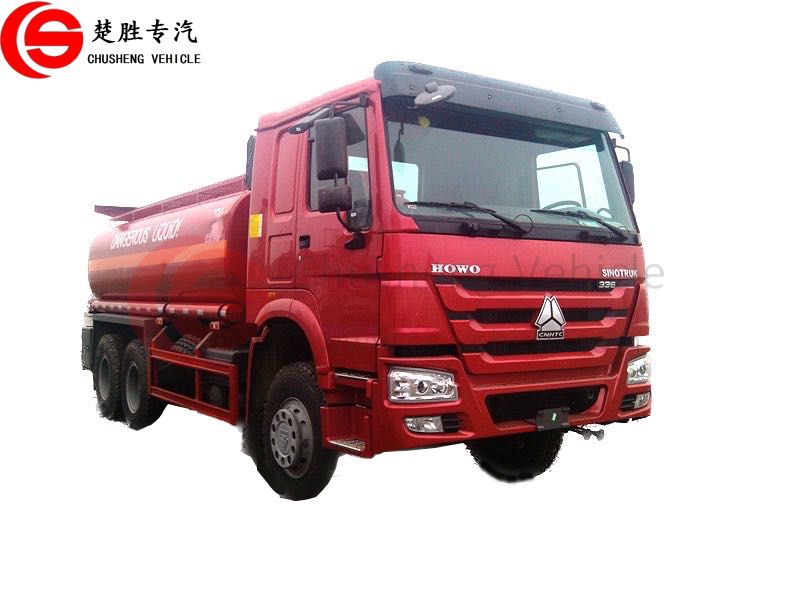
Understanding the critical difference between volume and weight prevents dangerous regulatory failures. You measure tank volume capacity in litres or gallons. However, regional gross vehicle weight limits dictate your actual payload capacity. You must calculate your maximum fill level based on the specific liquid density.
Capacity categories vary by country, vehicle configuration, and application. The ranges below are illustrative examples rather than universal classifications; selection should also account for product density, vehicle tare weight, axle loads, and local road limits.
Light and Medium Duty: Some rigid tank trucks in this broad category have capacities in the approximate range of 3,000 to 11,000 litres. Actual capacity varies with chassis, tank design, product, and local weight limits. These vehicles may suit urban distribution, residential fuel delivery, or local fleet support.
Heavy-Duty and Articulated Tankers: Some articulated tankers have nominal capacities in the approximate range of 30,000 to 45,000 litres, depending on market and configuration. The tractor-trailer combination, tank specification, product density, axle-group limits, and route restrictions determine the usable payload and whether the full volume can legally be carried.
Liquid density affects payload: a tank may reach its legal weight limit before reaching its nominal volume. Check gross vehicle weight, individual axle and axle-group limits, applicable bridge-formula requirements, and route restrictions. Fill limits and required ullage also depend on the tank design, product, and applicable transport rules.
For example, diesel and some liquid fertilizer solutions can have different densities, so the same volume may produce different payload weights. A dense chemical may cause a tanker to reach its gross-weight or axle-load limit before the tank is full. Do not assume that every dense acid will exceed legal limits at 40,000 litres; calculate the actual load using the product's density at the relevant temperature, vehicle tare weight, tank capacity, axle distribution, and applicable regulations.
Tank material selection affects weight, strength, corrosion resistance, cleanability, and lifecycle cost. Suitability must be confirmed for the specific product and service conditions; no single material is best for every liquid.
Table: Material Evaluation Matrix for Transport Tanks
Material Type | Durability Profile | Primary Advantages | Ideal Fleet Application |
|---|---|---|---|
Carbon Steel | Depends on grade, thickness, design, and service conditions | Can provide robust construction when properly designed; impact resistance depends on the complete structure | Non-corrosive industrial liquids and heavy-duty sites |
Aluminum | Depends on alloy, thickness, and design | Often lighter than steel and does not form iron rust; strength and chemical compatibility depend on alloy and service conditions | Standard fuel and petroleum transport |
Stainless Steel | High | Can offer corrosion resistance and cleanability when the grade and finish are suitable for the product and cleaning process | Food-grade goods and specific corrosive chemicals |
Tank internals influence liquid movement and compartment layout. Bulkheads separate compartments in a multi-compartment tank, but product separation also depends on sound construction, compatible valves and piping, and correct loading and unloading procedures. Bulkheads alone do not guarantee that products cannot mix.
Baffles are designed to reduce liquid movement and surge, although they do not eliminate it. Their number, openings, and arrangement depend on tank design and intended service. Safe operation still requires appropriate speed, following distance, braking, and cornering practices.
Sanitary tankers must balance cleanability and liquid-surge control. Some food-grade tanker trucks use smooth-bore designs or specially engineered internal structures; it is not accurate to say that all food-grade tankers omit baffles. Any internal structure must be hygienically designed and compatible with the cleaning process. Drivers should be trained for the handling characteristics of the specific tanker, including the effects of partial loads and liquid movement.
Compliance dictates every aspect of liquid transport. Regulatory frameworks ensure community safety and environmental protection during hazardous material transit.
Transporting hazardous materials may trigger specific requirements under applicable regulations. In the United States, relevant requirements may include U.S. Department of Transportation (DOT) and Pipeline and Hazardous Materials Safety Administration (PHMSA) rules; in countries applying it, the European Agreement concerning the International Carriage of Dangerous Goods by Road (ADR) may be relevant. Requirements for tank design, thickness, valves, inspection, marking, and rollover protection vary by material, tank specification, vehicle, and jurisdiction. Confirm the rules that apply to the exact cargo and route rather than assuming a single set of requirements covers every tanker.
Food transport requirements depend on the product, operation, and jurisdiction. In the United States, applicable FDA food-safety requirements may apply; 3-A Sanitary Standards are relevant to certain equipment and applications but should not be presented as universally mandatory for every tanker. Vapor recovery and spill-control obligations likewise depend on the product, facility, transfer activity, and applicable federal, state, and local rules. Verify the requirements for the intended service rather than assuming every tanker requires the same vapor-recovery equipment.
Liquid tank vehicles can be vulnerable to rollover, particularly when the tank is partially filled, the load shifts, or the vehicle corners or brakes improperly. Risk depends on vehicle geometry, loading, road conditions, speed, and driver behavior. Where available and appropriate, electronic stability control or roll-stability systems can help mitigate certain loss-of-control risks, but they do not prevent every rollover. Telematics can report vehicle location and selected sensor data when the relevant equipment is installed; continuous liquid-level monitoring should not be assumed on every vehicle.
Acquiring heavy transport assets demands a structured, risk-averse approach. You must look beyond simple specifications to ensure long-term fleet integration.
When evaluating used equipment, inspect the tank shell, welds, suspension attachment areas, valves, piping, and any lining for corrosion, damage, wear, or deterioration. Use qualified inspectors and review maintenance, inspection, and certification records. Whether vapor-control equipment needs upgrading depends on the vehicle, facility, intended service, and applicable rules; do not assume every older system will fail a current audit.
Fleet standardization can simplify maintenance and training when the equipment is compatible with operational needs. Standardize valve types, hose connections, controls, and compartment layouts where practical, while ensuring each configuration remains suitable for its product and regulatory requirements. Drivers must still be trained and checked out on the specific vehicle before operating it.
Procurement officers should follow a rigid, step-by-step evaluation process before issuing any purchase orders. Following this checklist prevents costly specification errors.
Identify Payload Chemistry: Document the exact chemical makeup, corrosiveness, and temperature requirements of the cargo.
Determine Density and Volume Limits: Calculate the liquid's specific gravity against your regional bridge laws and maximum axle weight limits.
Select Base Material: Choose between aluminum, carbon steel, or stainless steel based strictly on the payload requirements.
Verify Regulatory Compliance: Identify and confirm the regulations and standards applicable to the cargo, vehicle, facility, and operating jurisdiction; do not assume DOT, EPA, or 3-A requirements apply identically to every tanker.
Request Technical Data Sheet (TDS): Demand complete engineering blueprints and a formal quote from the manufacturer.
Selecting a heavy-duty liquid transport vehicle requires matching the cargo, tank design, material compatibility, internal configuration, payload, and applicable weight and safety requirements. Verify technical specifications and intended use with the manufacturer and qualified engineering or compliance personnel before purchase.
Consult the manufacturer or a qualified engineer about the exact cargo profile and operating conditions. Request relevant technical data, tank specifications, material-compatibility information, payload calculations, and inspection or certification records. Review bottom-loading, vapor-control, cleaning, and other safety arrangements where applicable before issuing a formal RFQ. These steps help support a suitable and compliant equipment selection, but do not replace verification against the rules for the intended operation.
A: Capacity varies by market, vehicle configuration, and tank design. Some rigid tank trucks used for local distribution fall in the approximate 10,000–20,000-litre range, while some articulated tankers are designed for roughly 35,000–45,000 litres. These are illustrative ranges, not universal standards. Actual usable load depends on tank specification, product density, vehicle tare weight, axle loads, route restrictions, and applicable fill requirements.
A: Aluminum tanks are often lighter than comparable steel designs, which may increase available payload where legal weight limits are the constraint. The actual benefit depends on tank design, vehicle configuration, product density, and route rules. Aluminum does not form iron rust, but material compatibility, cleanliness, and correct maintenance are still necessary to protect product quality.
A: Repurposing may be possible only after a qualified assessment of the previous and proposed products, tank materials, linings, seals, cleaning method, and applicable regulations. Some changes of service may be prohibited or impractical because of contamination or compatibility risks. Do not use a chemical tanker for food-grade products or an incompatible chemical unless the tank has been specifically approved, properly cleaned, and verified as suitable for that use.
A: Tanker designs vary. Some food-grade tankers use smooth-bore interiors, while others may use hygienically designed internal structures. Any internal features must be cleanable and compatible with the applicable sanitation requirements. Liquid surge can be more pronounced in some smooth-bore tanks, so drivers should be trained to account for partial loads, speed, braking, and cornering.


