Tel: +86-27-59323486 E-mail: info@cs-vehicle.com
- All
- Product Name
- Product Keyword
- Product Model
- Product Summary
- Product Description
- Multi Field Search

Views: 0 Author: Site Editor Publish Time: 2026-10-19 Origin: Site


Transporting liquid freight requires balancing tank volume, payload, vehicle configuration, and applicable weight limits. A tank's nominal capacity does not necessarily equal the volume that can be carried legally on a particular route. Usable capacity depends on the vehicle and trailer tare weight, axle configuration, product density, required fill limits, and local regulations. This guide explains the main factors fleet managers and freight buyers should consider when matching tanker specifications to a product and route.
Tank volume varies by market, vehicle configuration, product, and intended use. Some over-the-road semi-trailer tankers are designed for roughly 5,000–11,600 gallons, while some local straight trucks fall within approximately 1,000–3,500 gallons. Treat these as illustrative ranges and verify the specific vehicle's rated capacity and legal payload.
Tank truck capacity is constrained by the vehicle's rated capacity and applicable gross-weight, axle-load, bridge-formula, and route limits. In the United States, 80,000 lb is a general federal gross-weight limit for many standard interstate combinations, but exceptions and additional state, axle, and route requirements may apply.
Specialized vehicles such as chemical liquid tank trucks and milk tanker trucks may use different internal configurations depending on product compatibility, cleanability, surge control, and applicable requirements. Neither baffles nor smooth-bore designs should be assumed mandatory for every tanker in a category.
Proper capacity evaluation requires factoring in trailer tare weight, axle configurations, and product density, not just barrel dimensions.
Let us examine the basic specifications. Manufacturers print theoretical volumes on equipment spec sheets. This printed number does not serve as an actionable business metric. The physical space inside a steel barrel tells only half the story. The distinction between total gallon capacity and scalable weight limits matters immensely. You evaluate true tank truck capacity based on maximum legal payload. You cannot base decisions merely on interior barrel space.
Product density affects the weight of a given volume. As approximate examples, pure water weighs about 8.34 pounds per U.S. gallon and diesel fuel is often around 7.1 pounds per gallon, although actual values vary with composition and temperature. For a given vehicle and legal payload, a denser product generally reaches the weight limit at a lower volume. The allowable load must be calculated using the product's actual density and vehicle configuration.
A basic payload estimate starts with the vehicle combination's tare weight, meaning its empty weight in the specified configuration. Subtract tare weight from the applicable gross-weight limit to estimate the weight available for cargo, then check axle and axle-group limits, bridge-formula requirements, permits, and route restrictions. The 80,000 lb federal interstate limit applies to many standard U.S. combinations but is not a universal limit for every vehicle or route.
Baseline Specific Gravity and Weight per Gallon
Commodity Type | Approximate Specific Gravity | Estimated Weight (lbs/gal) |
|---|---|---|
Gasoline | 0.74 | 6.1 |
Diesel Fuel | 0.85 | 7.1 |
Pure Water | 1.00 | 8.34 |
Raw Milk | 1.03 | 8.60 |
Liquid Sugar | 1.33 | 11.1 |
Sulfuric Acid | 1.84 | 15.3 |
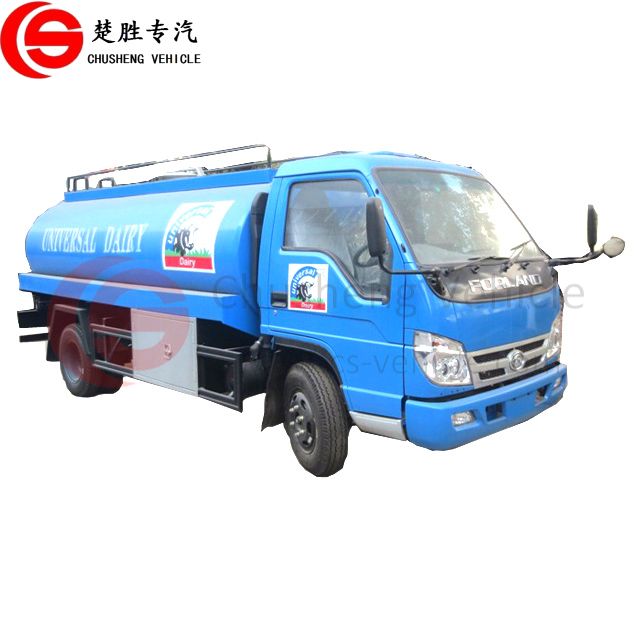
Heavy commodities and food-grade liquids pose unique logistical challenges. Consider milk tanker trucks and liquid sugar transports. These organic liquids are incredibly dense. Transporters intentionally use smaller volume trailers for these specific jobs. These heavy-duty trailers typically hold in a range that depends on vehicle design and market. A smaller tank may help keep product weight within legal limits, but actual payload must be calculated from product density, tare weight, axle distribution, bridge-formula requirements, and route rules. It is not appropriate to claim that a full 10,000-gallon milk tanker would necessarily damage or collapse a bridge.
Hazardous and industrial liquids introduce serious structural complexities. Operators rely on specialized chemical liquid tank trucks for highly corrosive materials. Tank materials, linings, seals, valves, and fittings must be compatible with the specific chemical, concentration, temperature, and operating conditions. Some products may require a suitable lining, while others may be carried in a compatible alloy without one. Wall thickness and safety equipment depend on the tank specification and applicable regulations; do not assume that all chemical tankers use thick rubber or fiberglass linings. Added equipment can affect tare weight and available payload.
Petroleum and light liquids allow for different operational designs. Fuel tankers may have relatively large nominal capacities, and many use elliptical or other purpose-designed tank cross-sections. Gasoline and diesel are generally less dense than water, but a large fuel tanker still cannot automatically be filled to its physical volume limit. Legal payload depends on actual product density, tank and vehicle tare weight, axle distribution, fill requirements, and route-specific limits.
Common Mistake: Ignoring the weight and compatibility implications of tank construction. Linings and specialized fittings can affect tare weight, but their weight varies by design and should be taken from the manufacturer's specifications rather than assumed to add a fixed amount.
Different logistical jobs require very different truck classes. We categorize these commercial vehicles based on volume limits and axle setups. Let us explore the standard industry classifications used today.
Local deliveries often rely on straight trucks, sometimes called bobtails. These vehicles may deliver heating fuel to homes or bulk water to rural sites. Some straight tank trucks have capacities in the approximate range of 1,000 to 3,500 gallons, but capacity varies by chassis, tank design, product, and local weight limits. Their maneuverability can make them suitable for some limited-access delivery sites. See these tank trucks for examples.
Standard semi-trailers are widely used for long-distance liquid transport. Some tanker semi-trailers have nominal capacities in the approximate range of 5,000 to 11,600 gallons. Actual legal loading depends on tank design, product density, tractor and trailer tare weights, axle-group ratings, bridge-formula requirements, and route-specific rules. Additional axles can help distribute weight, but do not by themselves guarantee legal compliance.
Some jurisdictions permit multi-trailer combinations, including doubles and B-trains, subject to specific vehicle, length, weight, licensing, and route requirements. Availability and restrictions vary considerably by jurisdiction; these combinations are not permitted freely on all routes. Combined tank volume depends on the individual trailers and products, so any capacity estimate should be verified against the proposed configuration and local rules.
Tank Truck Classification Matrix
Vehicle Classification | Typical Application | Average Volume Range (Gallons) | Key Operational Advantage |
|---|---|---|---|
Straight Truck (Bobtail) | Last-mile residential delivery | 1,000 - 3,500 | High maneuverability in tight urban spaces |
Standard Semi-Trailer | Long-haul interstate transport | 5,000 - 11,600 | Optimal balance of volume and highway legality |
Multi-Trailer (B-Train) | High-volume regional distribution | 10,000 - 14,000+ | Maximum scale for lighter density commodities |
Liquid transport involves dynamic forces that drivers need to understand. Liquid can shift inside a partially filled tank during acceleration, braking, and cornering. This surge can affect vehicle handling and stability, although the degree of risk depends on tank design, compartment layout, fill level, speed, and driving conditions. Drivers should be trained to account for liquid movement and follow safe braking, cornering, and speed practices.
We counter this dangerous surge using specific interior engineering designs. Baffled and smooth bore realities dictate exactly how you load a trailer safely.
Baffled Tanks: Baffles are internal structures designed to reduce liquid movement within a tank. Their layout and openings vary by design. Baffles do not necessarily create separate product compartments; compartmentalization requires suitable bulkheads and a compatible valve and piping arrangement. Whether baffles are used depends on the tank design, cargo, and applicable requirements.
Smooth-Bore Tanks: Smooth-bore tanks have no internal surge baffles, although a tank may still have compartments separated by bulkheads. Some food-grade tankers use smooth-bore designs to support cleanability, but this is not a universal requirement for every food-grade tanker. A smooth interior can aid cleaning but does not prevent bacterial growth or replace validated sanitation. Partial loads can create significant surge, so follow the tank manufacturer's loading guidance and applicable operating procedures rather than treating one fill level as universally safe.
Regulatory compliance affects daily fleet operations. In the United States, the Federal Bridge Formula is one factor used to determine allowable vehicle weight based on axle spacing. Weight limits and enforcement procedures vary by jurisdiction and circumstance. An overweight vehicle may be cited, delayed, prohibited from continuing until brought into compliance, or subject to other enforcement action. Dispatchers and drivers should verify gross weight, axle loads, bridge-formula limits, permits, and route restrictions before departure.
Best Practice: Train relevant staff to understand applicable gross-weight, axle-load, and bridge-formula requirements. Use the actual vehicle configuration and route rules for each load, and verify calculations before dispatch.
Choosing the perfect trailer requires a highly structured approach. Follow this standardized logic to optimize your commercial fleet properly.
Calculate Commodity Weight: First, multiply your total volume needs by the specific liquid density. This critical mathematical step establishes your baseline payload weight.
Evaluate Fleet Specs: Next, compare the necessary payload weight against specific tare weights. Examine your available tractor-trailer combinations carefully. Subtract the empty weight from the legal maximum to find your true allowance.
Factor in Scalability & Routing: Finally, assess the planned delivery route thoroughly. Check if the journey involves restrictive bridges or low tunnels. Determine if you require special drop-axle trailers to carry the volume legally.
Applying a structured selection process helps freight buyers compare options. For lower-density products, tank volume may be the main capacity constraint, while denser products may reach legal weight limits first. For corrosive or otherwise specialized cargo, material compatibility and tank certification are also critical. The appropriate configuration should balance usable volume, product requirements, legal payload, route restrictions, and safe operating limits.
Tanker capacity is more than a nominal gallon figure. Safe and legal loading requires considering product density, vehicle tare weight, tank specifications, axle distribution, fill limits, and applicable regulations. Specific gravity is useful, but it is only one input; operators should use verified product data and the actual vehicle and route requirements when calculating loads.
We highly encourage decision-makers to audit current freight specifications regularly. You should consult with internal engineering teams frequently. You might also rely on trusted third-party logistics partners for guidance. Optimize your trailer selection completely before finalizing new supply chain contracts. Proper planning absolutely prevents expensive weigh station violations and ensures optimal driver safety.
A: Some road-going fuel semi-tankers have nominal capacities of roughly 9,000–11,600 U.S. gallons, but there is no single capacity for every 18-wheeler tanker. Verify the tank specification and calculate the allowable load from product density, tare weight, axle limits, and route requirements.
A: Milk is generally denser than gasoline or diesel, so a milk tanker may reach its legal payload limit before reaching nominal tank volume. Whether it can be filled completely depends on product density, tank capacity, vehicle tare weight, axle distribution, and applicable rules. Food-grade tank designs vary; operators must follow the specific tank's surge-control and loading guidance.
A: Capacity depends on the chemical's density, tank material and specification, any required lining or insulation, tare weight, and legal weight limits. Not every chemical tanker requires insulation or an internal lining, and compartmentalization depends on the intended cargo and design. Use the manufacturer's specifications for the actual vehicle.
A: The general federal gross-weight limit for many standard U.S. interstate combinations is 80,000 pounds, but this is not universal for every vehicle or route. Federal axle and bridge-formula limits, state rules, permits, and specific route restrictions can also affect the allowable weight. Verify the rules for the exact vehicle and trip.


