Tel: +86-27-59323486 E-mail: info@cs-vehicle.com
- All
- Product Name
- Product Keyword
- Product Model
- Product Summary
- Product Description
- Multi Field Search

Views: 0 Author: Site Editor Publish Time: 2026-10-24 Origin: Site


Fleet managers face a critical choice when designing new equipment. Choosing the wrong offloading system fundamentally restricts your operational flexibility. It often leads to incompatible delivery sites and frustratingly slow drop times. You simply cannot afford equipment bottlenecks in a high-demand delivery schedule.
Discharge systems directly dictate gross vehicle weight and payload capacity. If you specify the wrong setup, you risk unnecessary capital expenditures and heavy maintenance burdens down the line. You want your vehicles on the road generating revenue, not sidelined due to poorly matched pumping equipment or overloaded chassis configurations.
This guide provides a practical framework for comparing gravity and pump discharge systems. It explains how to assess vehicle specifications against customer infrastructure, delivery routes, payload limits, maintenance needs, and applicable safety requirements. The right configuration depends on the product being transported and the conditions at each delivery site.
Gravity Discharge can reduce equipment weight and pump-related maintenance, but it works only when the available elevation difference and system design provide sufficient flow. It is often used for suitable underground storage tank (UST) deliveries.
Pump Discharge provides operational versatility for above-ground storage tanks (ASTs) and mobile equipment fueling but requires a PTO (Power Take-Off) system, increasing tare weight and maintenance costs.
Infrastructure is the Deciding Factor: The choice should be reverse-engineered from your primary delivery site profiles (gas stations vs. construction sites/farms).
Hybrid Systems Exist: Bypass manifolds can allow a single truck to perform both functions, though at a premium cost and weight.
To spec a highly efficient fuel tank truck, you must understand the underlying physics of your chosen discharge method. A successful discharge system must safely and efficiently transfer product. It needs to perform this action without causing vapor lock, creating cross-contamination, or forcing excessive driver downtime during drops.
These mechanical choices form the foundation of your vehicle build. They dictate everything from chassis selection to daily driver protocols.
Gravity systems rely on the elevation difference between the liquid in the truck tank and the receiving system, together with the resistance of the hoses, valves, and piping. Fuel can flow when sufficient head is available and the receiving system is properly configured. The receiving connection generally needs to be below the effective liquid level in the truck; the exact requirements depend on the tank and discharge-system design. Use valves and fittings that meet the applicable specifications for the vehicle and product.
A gravity system has fewer powered components than a pump-based system. When the receiving installation, hose routing, and elevation difference are suitable, it can transfer product into underground storage tanks (USTs) without a truck-mounted delivery pump. Actual unloading time depends on the available head, hose and pipe dimensions, valves, product properties, and receiving-system limits.
Pump systems take a fundamentally different approach. They utilize a mechanical pump driven by a Power Take-Off (PTO) unit connected to the truck's transmission. Common styles include rotary vane or gear pumps. These units create mechanical pressure to push fuel through delivery hoses.
A properly selected pump can provide the pressure needed to overcome elevation differences and system resistance, allowing delivery through longer hoses or to some elevated above-ground storage tanks (ASTs). The allowable delivery arrangement and actual flow rate depend on the pump curve, suction conditions, hose and pipe resistance, product properties, and the receiving tank's design limits.
The selected system affects unloading performance, component layout, maintenance, and safety requirements. Pump and PTO installations must be compatible with the chassis, driveline, mounting arrangement, and vehicle controls. Whether additional structural support or electrical changes are needed depends on the specific vehicle and equipment design; these should be confirmed with the chassis and equipment manufacturers.
Safety and vapor-control arrangements must be designed for the product, transfer method, receiving installation, and applicable local requirements. Overfill prevention, pressure relief, venting, and vapor-return equipment should be selected as a compatible system rather than assumed to be identical for every delivery setup.
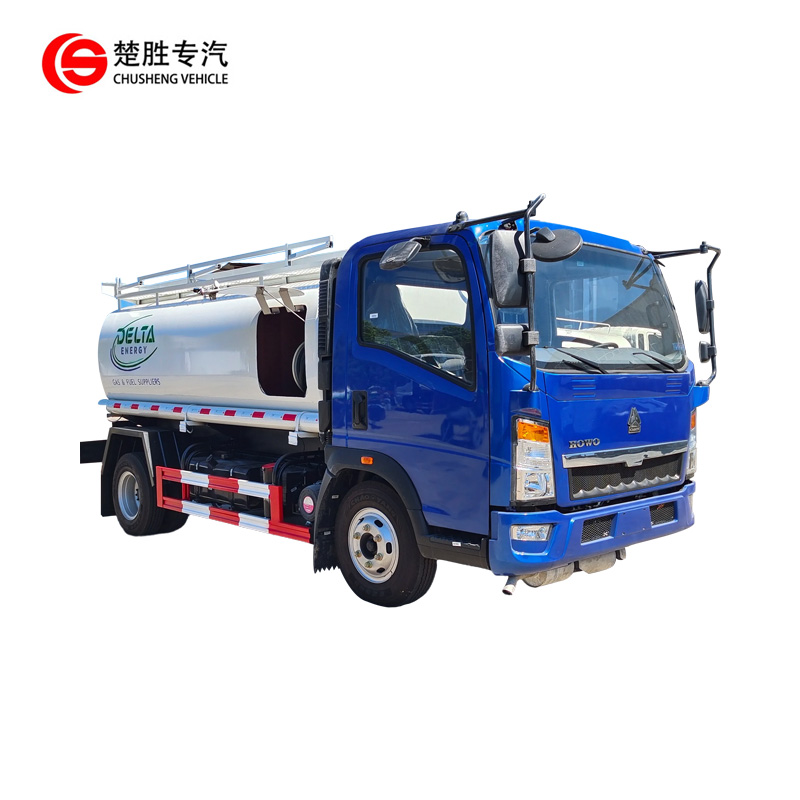
Where the receiving installation and route are suitable, gravity discharge can reduce mechanical complexity and avoid the need for a truck-mounted product pump. Whether it is the best option depends on the required delivery rate, available elevation difference, site configuration, and operating procedures.
Gravity systems excel in specific, high-volume environments. They offer distinct advantages for dedicated fleet operations.
Flow Rate: Gravity-discharge flow varies substantially with available head, hose and pipe dimensions, valves, fittings, product properties, and receiving-system design. Do not assume a standard flow rate from a 4-inch connection alone; use verified performance data for the specific installation.
Reduced Mechanical Complexity: A gravity system does not need a powered product pump for gravity transfer, which can reduce pump-related maintenance. Valves, seals, hoses, and other components still require inspection and maintenance.
Payload Maximization: A lighter system weight maximizes your legally permissible fuel payload. Every pound saved on mechanical equipment translates directly to heavier, more profitable fuel loads.
Gravity systems have important limitations because flow depends on the available elevation difference and resistance in the transfer path.
Gravity discharge cannot actively add pressure to move fuel uphill, so elevated receiving connections or systems with high flow resistance may require a pump. However, an above-ground storage tank (AST) is not automatically unsuitable: feasibility depends on the relative elevations, piping layout, and receiving-system design. Vehicle parking angle and tank compartment geometry can affect drainage, so follow the vehicle manufacturer's operating instructions and site procedures to manage residual product and prevent cross-contamination.
Gravity systems may suit bulk fuel deliveries to retail sites where the receiving equipment is designed for gravity unloading and sufficient head is available. Some diesel tanker trucks use gravity discharge, while others use pumps or combined systems. Compare delivery-site requirements, expected flow, operating procedures, and legal payload before choosing a configuration.
Always verify drop tube capacity before opening the API valves.
Ensure the truck parks on a level grade to prevent trapped fuel.
Regularly inspect the internal emergency valves for proper seating and debris clearing.
Sometimes you cannot rely on gravity. Pumping systems offer the operational flexibility needed for unpredictable or non-standard delivery sites. They turn a simple transport vehicle into a highly adaptable mobile fueling station.
Pump systems unlock new customer bases. They provide the muscle needed for demanding drop environments.
Pump systems can be useful for deliveries to construction sites, agricultural equipment, and commercial above-ground storage where the layout or elevation requires pumped transfer. They can support metered delivery through suitable hoses, but the pump must be correctly specified for the product and operating conditions. Flow is not independent of tank level, site elevation, hose length, suction conditions, or system resistance; actual performance should be checked against the pump curve and equipment limits.
This versatility comes at a steep price. You must account for added weight, cost, and maintenance complexity.
Maintenance Load: You must perform regular inspections of PTOs, drivelines, pump seals, and relief valves. A failed PTO seal can shut down an entire delivery route instantly.
Capital Expense: Adding a commercial-grade pump, custom manifold, and PTO unit adds significant upfront CapEx to the truck build.
Payload Penalty: The added weight of pumps, manifolds, and PTOs directly reduces the volume of fuel you can legally haul. This payload penalty chips away at route profitability over time.
Pump systems introduce unique safety hazards. You must enforce rigorous bypass valve maintenance. If a driver accidentally closes a downstream valve while the pump runs, they risk "dead-heading" the pump. This creates catastrophic pressure buildup, potentially blowing seals or rupturing hoses.
Turbulent filling and air entrainment can contribute to foaming or static-related hazards during fuel transfer. Use approved transfer procedures and compatible equipment, control flow as required by the system design, and follow the receiving facility's requirements. Do not add anti-foam agents unless they are approved for the product and intended use.
Inspect and lubricate PTO driveline U-joints at the intervals specified by the component manufacturer and the vehicle maintenance schedule.
Inspect and test the pump bypass or pressure-relief system at the intervals and by the procedures specified by the equipment manufacturer.
Check the pump housing for weep-hole leaks, indicating a failing internal seal.
Follow the manufacturer's product-changeover and cleaning procedures when switching products; use dedicated or appropriately configured compartments and lines where required to prevent contamination. Do not assume flushing alone makes every system suitable for every product.
Procuring the right equipment requires balancing conflicting priorities. You must weigh route speed against delivery flexibility.
Below is a comparative breakdown to guide your procurement strategy.
Evaluation Metric | Gravity Discharge Systems | Pump Discharge Systems |
|---|---|---|
Drop Speed (USTs) | Varies with head, piping, product, and receiving-system limits | Moderate (Limited by pump rating) |
AST / Uphill Delivery | Limited by available head and system layout | Highly Capable |
Tare Weight Impact | Minimal (Maximizes Payload) | Heavy (Reduces Payload) |
Maintenance Burden | Low (Valves and seals only) | High (PTO, driveline, pump housing) |
Equipment Cost | Standard / Lower Baseline | High Premium |
Route economics should guide system selection. For high-volume retail deliveries, compare measured or manufacturer-supported unloading times for the proposed gravity and pump configurations. Gravity may be suitable where adequate head and compatible receiving equipment are available, but it is not mandatory at every retail site.
For multi-stop, variable-volume deliveries, a pump and meter system may provide useful flexibility and control. It is not universally required for every farm or construction-site delivery; confirm the receiving equipment, elevation, required metering, and transfer procedure at each location.
Pump systems require robust, pressure-rated hoses and complex inline metering systems. These heavy hoses resist bursting under active pressure but cause driver fatigue during deployment. Gravity systems typically utilize lightweight drop hoses. They remain easy to maneuver because they handle lower internal pressures.
Manifold layout affects drainage and product segregation. A well-designed gravity manifold can aid drainage, but neither gravity systems nor sloped piping guarantee that all residual product is removed. Follow the manufacturer's draining, compartment segregation, and product-changeover procedures.
Pump, meter, and manifold configurations can retain residual product. Product changeovers must follow the equipment manufacturer's procedures and the operator's product-segregation requirements. The correct method may involve dedicated equipment or lines rather than simply flushing a system, particularly when switching between different fuel products.
Vapor-control requirements depend on the product, delivery method, receiving facility, equipment design, and applicable federal, state, and local rules. Do not assume that every transfer system must use the same vapor-recovery configuration or that Stage I and Stage II requirements apply identically to all UST and AST deliveries. The receiving tank's venting and vapor-control system must be suitable for the intended transfer rate and approved operating conditions.
Vehicle size often predetermines your discharge options. What works on a massive transport trailer rarely applies to a nimble local delivery truck.
Local routes often benefit from flexible delivery equipment. Small fuel delivery trucks (often called bobtails or tank wagons) commonly use pump discharge, especially for metered deliveries to equipment or tanks where gravity alone is insufficient. The required configuration depends on the intended application.
These vehicles may be used for home heating oil, direct fleet fueling (wet hosing), and filling commercial bulk tanks. Pumping is often needed where the receiving point is elevated, the hose run is long, or metered delivery is required. Whether gravity is feasible depends on the relative elevations and the installation layout; job-site conditions and safe vehicle positioning must also be considered.
When specifying a bobtail, pump sizing should be based on the required flow and pressure, product properties, hose length, metering equipment, and the manufacturer's specifications. A larger nominal pump connection does not by itself guarantee faster delivery and may require compatible PTO, piping, valves, and other components.
Highway operations must account for payload, axle loads, equipment weight, and route restrictions. Some large bulk fuel transports use gravity discharge to reduce pump-related equipment, while others use pumps or hybrid systems to meet delivery requirements. The 80,000 lb figure is a general federal interstate gross-weight limit for many standard configurations, not a universal limit for every vehicle or route; applicable axle, bridge-formula, state, and permit requirements must also be checked.
There is a notable exception. Dedicated aviation or agricultural bulk transports may feature specialized pump-assist setups. If the destination infrastructure lacks its own offloading pumps, the transport trailer must carry a pump to move the product into massive ASTs.
Where routes regularly require both gravity and pumped transfer, a hybrid configuration may be worth evaluating. Some fuel tank trucks can be configured for both methods, but the manifold, valves, pump, metering, and vapor-control arrangements must be designed as a compatible system. Suitability for UST or AST deliveries depends on the actual site and equipment requirements.
A hybrid setup generally adds cost, weight, and maintenance compared with a simpler gravity-only arrangement. Evaluate those trade-offs against the number and type of deliveries that genuinely require pumping before specifying a combined system.
Do not default to a pump discharge system "just in case." You must strategically map your customer tank infrastructure over the next 5 to 7 years. If 90% of your current and projected drops are underground storage tanks, specify gravity systems to maximize your payload and outsource or subcontract the rare AST routes.
Specifying the right equipment requires clear data. To make an informed choice for your next purchase, follow these steps:
Audit your current fleet’s tare weight to see how much payload you lose to existing pump hardware.
Review PTO and pump maintenance logs to calculate the true operational cost of mechanical discharge systems.
Analyze your route density to determine if pumping slows down your highest-volume drivers.
Consult directly with your tank manufacturer to review schematic layouts for hybrid manifold options if your customer base remains highly mixed.
Matching equipment specifications to actual delivery-site conditions can improve operational fit and help control downtime and maintenance costs. Confirm performance assumptions with the equipment manufacturer and validate the configuration against applicable safety and regulatory requirements.
A: Yes, some trucks can be configured for both gravity and pump discharge. The design must provide compatible manifolds, valves, controls, and any required metering or vapor-control equipment. Added equipment may increase weight, cost, and maintenance. Confirm suitability for each receiving site with the manufacturer.
A: Neither method is always faster. Gravity discharge may provide high flow when sufficient head and a low-resistance transfer path are available. Pump performance depends on the pump rating and the full system configuration. Compare verified flow and unloading-time data for the actual vehicle and receiving installation rather than relying on connection size alone.
A: Turbulent filling and air entrainment can contribute to foaming. Follow approved transfer procedures, use compatible filling equipment, and control flow as required by the system design. Use additives only when they are approved for the fuel and intended application.


