Tel: +86-27-59323486 E-mail: info@cs-vehicle.com
- All
- Product Name
- Product Keyword
- Product Model
- Product Summary
- Product Description
- Multi Field Search

Views: 0 Author: Site Editor Publish Time: 2026-10-15 Origin: Site


Expanding a construction fleet is a significant capital decision. Procurement teams need to balance purchase cost, equipment capacity, expected utilization, maintenance, emissions requirements, and operator needs. Selecting the right mix of construction vehicles starts with identifying site requirements and operational bottlenecks. This guide outlines common equipment categories and practical factors to consider when comparing specifications, fleet integration, and long-term operating costs.
Procurement should be driven by measurable site bottlenecks and projected utilization rates, not just upfront capital costs.
Categorizing vehicles by specific operational phases (earthmoving, material transport, paving) clarifies cross-functional dependencies.
Modern fleet evaluation should consider telematics compatibility, applicable emissions requirements, local service support, and the machine's actual operating conditions alongside specification-sheet comparisons.
Leasing versus owning relies on a rigorous analysis of project timelines, maintenance liabilities, and balance sheet strategies.
Holding underutilized heavy assets poses a massive financial risk to your organization. Idle machinery drains capital and takes up valuable yard space. You must clearly identify operational bottlenecks before adding new assets. Delayed material staging often points to specific fleet gaps. A shortage of loaders might slow down your entire crushing operation. Recognizing these choke points helps you target the exact equipment needed.
A successful procurement decision maximizes equipment uptime above all else. You need to match payload capacities directly to your cycle-time requirements. If a loader takes too many passes to fill a hauler, productivity drops. You must also prioritize standardized operator training. Standardized cabs and controls allow operators to switch machines safely. This flexibility keeps your projects moving when personnel changes occur.
Evaluate how new assets fit into the existing fleet. Compatible attachments, shared diagnostic tools, and common replacement parts can simplify maintenance where the equipment models support them. Attachment interfaces and diagnostic systems are not universally interchangeable, so confirm compatibility before assuming that standardization will reduce costs or downtime.
Understanding equipment categories clarifies cross-functional dependencies on the job site. Each machine solves specific site problems. We have grouped these essential vehicles by their primary operational phases.
Excavators: These machines handle digging, trenching, material handling, and some demolition tasks with suitable attachments. For confined sites, assess operating weight, reach, digging force, and swing radius. A zero- or reduced-tail-swing model can reduce rear overhang, but it does not eliminate collision risk near structures or people.
Bulldozers: Dozers push soil and other material and can perform rough grading. Track choice should match ground conditions and required traction. Low-ground-pressure (LGP) configurations can reduce ground pressure on soft terrain, but they do not guarantee that a machine will avoid sinking; soil bearing capacity, machine weight, and operating conditions still matter.
Backhoe Loaders: Backhoe loaders combine a front loader with a rear excavating arm and can be useful on smaller or varied jobsites. They can perform several tasks, but they do not always replace dedicated excavators or loaders when production rates, reach, capacity, or duty cycle are demanding.
Skid Steer Loaders: Skid steers are compact and maneuverable, with attachments available for tasks such as loading, sweeping, and material handling. Turning behavior and attachment changes depend on the machine design and coupling system; verify attachment compatibility, rated operating capacity, and the required safety procedures.
Motor Graders: Motor graders are used for fine grading, road shaping, and creating specified slopes or crossfalls. The final result depends on operator skill, machine setup, surveying or grade-control systems, and soil or aggregate conditions; grading alone cannot guarantee that a finished surface will avoid future failures.
Trenchers: Trenchers can efficiently cut long, relatively uniform trenches for utilities and pipe installation in suitable ground. Their productivity depends on soil and rock conditions, trench dimensions, access, and spoil handling. They are not always faster than excavators, particularly in mixed ground or where trench geometry changes.
Wheel Loaders: Wheel loaders move and load loose materials, handle stockpiles, and may feed crushers or trucks. Compare bucket capacity, material density, cycle time, travel distance, and the receiving vehicle's payload. Matching loader and haul-truck capacity can improve workflow, but actual production depends on site conditions and operating practices.
Articulated Haulers: Articulated haulers are designed for off-road material transport and can perform well on uneven or soft ground when correctly specified. Their articulation helps the vehicle follow terrain, but does not guarantee that every wheel remains in contact with the ground or that the machine will avoid getting stuck. Suitability depends on ground conditions, slope, tires, payload, and site access.
Dump Trucks: Road-going dump trucks and off-highway haul trucks serve different applications. Road-going construction trucks may transport aggregates, asphalt, and demolition material on public roads when properly registered and configured. Off-highway haul trucks are designed primarily for worksites and may not be road-legal. Axle configuration alone does not guarantee compliance; gross weight, axle loads, dimensions, permits, and route rules must also be checked.
Truck-Mounted Cranes: Truck-mounted cranes can be useful for lifting jobs that require road travel between sites. Safe operation still requires a suitable setup area, correct outrigger deployment, ground-bearing assessment, load-chart compliance, and adequate clearance. They may require less mobilization than some dedicated cranes, depending on the job.
Rough Terrain Cranes: Rough-terrain cranes are designed for travel on uneven jobsite surfaces within their operating limits. Stability depends on the load chart, boom configuration, ground conditions, crane level, and outrigger or tire-supported setup. Outriggers do not make an unsuitable or unstable surface safe without proper assessment.
Telehandlers: Telehandlers combine lifting with forward reach and are often used to position materials around construction sites. Capacity decreases as reach and lift height increase, so operators must follow the machine's load chart and use approved attachments. Placing materials at height requires a suitable setup, safe clearances, and compliance with site rules.
Rough-Terrain Forklifts: Rough-terrain forklifts are designed for suitable outdoor and unpaved surfaces, with tires and chassis intended for those conditions. Evaluate rated capacity, ground clearance, tire type, lift height, load center, and surface conditions. They still require proper operator training and safe load handling.
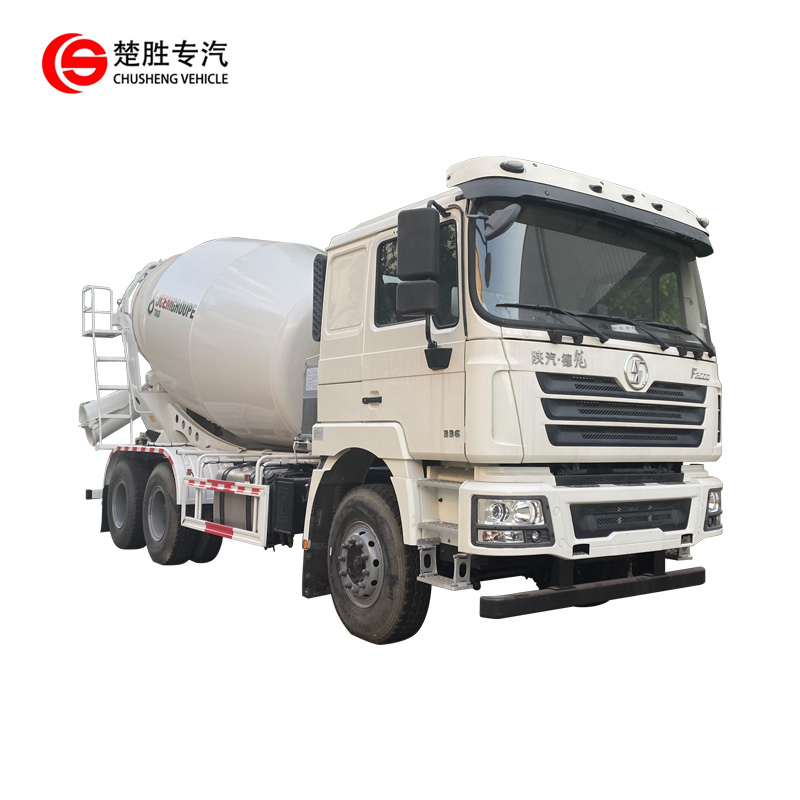
Concrete Mixer Trucks: Concrete mixer trucks agitate or mix concrete during transport according to the mix design and operating instructions. Drum rotation does not stop cement hydration or extend workable time indefinitely. Delivery time, temperature, mix specifications, and applicable concrete standards must be managed to maintain material quality.
Concrete Pumps (Boom/Line): Concrete pumps can place concrete where direct truck discharge is impractical. Boom pumps provide reach from an elevated articulated boom, while line pumps use connected delivery pipe or hose. Actual reach and suitability depend on the pump model, mix properties, pipeline layout, access, and setup space.
Asphalt Pavers: Pavers distribute asphalt at a controlled width and depth. Screed design, temperature management, material supply, paving speed, and operator setup all affect the finish. A heated screed supports proper mat formation but does not guarantee a smooth or durable surface. Wider paving may reduce longitudinal joints when the project layout and paving plan allow it.
Cold Planers (Milling Machines): Cold planers remove asphalt or other pavement to a controlled depth as part of resurfacing and rehabilitation. Milled material may be collected for reuse or recycling when its quality and the project process allow; recovery and reuse are not automatic in every job.
Compactors & Rollers: Compactors are selected according to the material, layer thickness, moisture, and required density. Vibratory rollers are often used on granular materials, while static rollers may suit certain finishing tasks. The correct method depends on the mix and site specification; no roller type universally prevents segregation or guarantees target density.
Water Trucks: Water trucks can support dust suppression and, where appropriate, moisture conditioning for soil compaction. Water application should follow site environmental and safety plans; excessive watering can create runoff, erosion, slippery surfaces, or unsuitable soil moisture.
Sweeper Trucks: Sweeper trucks can remove dust, debris, and tracked material from paved areas. They may help meet site housekeeping and local road-cleanliness requirements, but compliance depends on local rules and the overall site-control plan; using a sweeper does not guarantee that fines or complaints will be avoided.
Equipment procurement should connect specifications to measurable operating needs. Compare engine power alongside payload, cycle time, fuel or energy consumption, site conditions, and expected production. Metrics such as material moved per hour or cost per operating hour can be useful, but results depend on the task, operator, haul distance, and working conditions. Avoid selecting equipment on horsepower alone.
Emissions requirements can affect equipment selection, maintenance, and where a machine may operate. In the United States, EPA Tier 4 standards apply to many categories of nonroad diesel engines, with applicability depending on engine power and equipment class. Engines equipped with selective catalytic reduction systems generally require suitable diesel exhaust fluid (DEF); contaminated or incorrect DEF can cause faults and, on some systems, reduced engine power. Local restrictions vary by jurisdiction and site. Electric compact equipment can be attractive for indoor or noise-sensitive work, while battery capacity, charging access, duty cycle, and available models should be assessed for larger applications.
Telematics can help fleet managers review utilization, idle time, fuel use, location, fault codes, and selected operator-behavior indicators. Mixed-fleet platforms may consolidate data, but supported machines, data fields, and integration quality vary by provider and OEM. Alerts can support preventive maintenance; they do not guarantee that failures will be prevented. Use the data alongside inspections, maintenance schedules, and operator training.
The choice between buying, leasing, and renting should be based on expected utilization and total cost over the planned ownership period. There is no universal 60–70% utilization threshold that determines when purchase is better. Compare acquisition and financing costs, rental rates, maintenance responsibility, transport, downtime risk, residual value, project duration, and likely future demand. Short-term rental can help cover temporary peaks without committing to long-term ownership.
Modern equipment may rely on electronic controls, sensors, and diagnostic tools, so budget for maintenance training, software access where required, subscriptions, and qualified service support. Access requirements differ by manufacturer and model; not every owner must purchase proprietary software for every diagnostic task. Compare dealer support with qualified independent service options and consider likely response times in your region.
You also face real operator adoption risks when upgrading fleets. Introducing complex electro-hydraulic controls creates friction for veteran operators. Traditional levers feel different than programmable joysticks. Frustrated operators work slower and make mistakes. You must highlight the need for vendor-supplied training during the purchase phase. Hands-on familiarization reduces anxiety and restores productivity quickly. Operator buy-in ultimately dictates the success of new equipment.
Vendor support is an important part of equipment selection. Use a scoring matrix to compare local service coverage, parts availability, warranty terms, training, and lifecycle cost. Set response-time and parts-delivery targets that are realistic for the location and criticality of the equipment, and confirm them in writing where possible. Review warranty exclusions, required maintenance, and the process for handling claims.
Evaluation Criteria | Weight (%) | Target Metric | Operational Impact |
|---|---|---|---|
Dealer Response Time | 30% | Set a target based on local support and operating needs | Minimizes active downtime on job sites. |
Parts Availability | 30% | Agree service levels for critical parts | Prevents project delays for common wear items. |
Warranty Coverage | 25% | Compare coverage, duration, exclusions, and hours limits | Reduces unexpected out-of-pocket repair burdens. |
Tech & Operator Training | 15% | Included on-site sessions | Accelerates operator adoption and safe usage. |
Specification sheets do not capture every operating condition. Where practical, arrange a supervised demonstration or trial using representative loads and site conditions. Evaluate visibility, comfort, cycle times, fuel use, maneuverability, and safety. Follow the supplier's operating requirements and site safety procedures during any trial.
Your next steps should involve actionable data review. Guide your fleet team to audit current asset utilization reports immediately. Identify which machines sit idle and which work overtime. Once you define the gaps, initiate a targeted Request for Proposal (RFP). Focus this RFP firmly on lifecycle maintenance demands and uptime guarantees. Clear data ensures you only invest in equipment your operations truly need.
Building an effective construction fleet requires matching equipment capabilities to project needs, expected utilization, emissions requirements, maintenance support, and operator readiness. A structured comparison of lifecycle cost and site performance can help protect capital and improve fleet planning.
Start by reviewing current utilization and maintenance data, identifying equipment shortages or idle assets, and comparing options against upcoming projects. Consult qualified equipment and procurement specialists before major purchases. Telematics and vendor assessments can inform the decision, but outcomes depend on the quality of the data, operating conditions, and implementation.
A: Backhoe loaders and skid steer loaders can be versatile choices for mixed-use fleets because they support a range of tasks and attachments. The best option depends on digging depth, lift capacity, site access, required production, attachment compatibility, and operator needs.
A: Applicable emissions standards affect engine technology, maintenance, and where equipment may be used. Many Tier 4 Final engines use aftertreatment systems, and engines with selective catalytic reduction require suitable DEF. Maintenance needs vary by engine and duty cycle. Restrictions on older equipment depend on local, state, and federal rules; there is no single urban usage ban that applies everywhere.
A: A truck-mounted crane may suit projects that require travel between sites and relatively quick setup for localized lifts. Compare the required lift capacity and radius, load chart, setup space, road access, ground conditions, and mobilization costs with those of a dedicated mobile crane. Suitability and cost-effectiveness depend on the job.
A: Useful metrics can include idle time, fuel or energy use, utilization, location, and fault-code alerts, depending on the telematics system. These data can help identify patterns and schedule maintenance, but alerts do not guarantee that a fault will be caught early or prevent equipment failure.


