Tel: +86-27-59323486 E-mail: info@cs-vehicle.com
- All
- Product Name
- Product Keyword
- Product Model
- Product Summary
- Product Description
- Multi Field Search

Views: 269 Author: Site Editor Publish Time: 2026-06-19 Origin: Site


Transporting heavy building materials is one of the most critical aspects of construction and infrastructure projects. Ensuring that materials such as steel beams, concrete blocks, cement bags, and timber arrive safely, efficiently, and on schedule is essential for project success. Among the various transportation options, the lorry truck remains the preferred choice for moving bulky and heavy construction materials. Its dominance can be attributed to a combination of high payload capacity, operational efficiency, safety, adaptability, and cost-effectiveness. This article explores why lorry trucks are the go-to solution for construction logistics.
Construction materials vary widely in terms of size, weight, and fragility. Steel girders, concrete precast panels, bricks, and cement are fundamental to building structures but are often extremely heavy and difficult to handle. Transporting such materials requires vehicles that can accommodate large weights without compromising stability or safety.
Construction logistics demand vehicles that provide sufficient payload capacity, stability, accessibility, efficiency, and cost-effectiveness. While smaller vans or pickup trucks can transport light or medium loads, they often fall short when handling the heavy materials typically used in commercial and infrastructure projects. Rail transport can carry larger weights but lacks the flexibility to reach specific construction sites. Lorry trucks effectively bridge this gap.
One of the main reasons lorry trucks are preferred is their ability to transport large volumes of materials in a single journey. Most lorries are engineered to carry several tons of weight safely, making them ideal for heavy items like cement bags, steel rods, and concrete panels. Unlike smaller vehicles that require multiple trips, lorries maximize efficiency by handling bulk loads.
The following table illustrates the payload capacities of common transport vehicles used in construction:
Vehicle Type | Typical Payload Capacity | Suitable Materials |
Van | 1-2 tons | Light building materials, small tools |
Pickup Truck | 1-3 tons | Lumber, bags of cement, smaller steel rods |
Lorry Truck | 10-25 tons | Steel beams, precast concrete panels, heavy aggregates |
Flatbed Trailer | 20-40 tons | Oversized machinery, bulk materials |
Rail Freight | 50+ tons | Bulk aggregates, sand, gravel, steel coils |
The table demonstrates that lorry trucks provide an optimal balance between payload capacity and site accessibility. While rail freight can handle heavier loads, it is limited by track infrastructure and requires additional handling to reach construction sites. Lorry trucks, in contrast, can transport materials directly from supply points to sites, reducing handling steps and minimizing potential damage.
Construction sites often present a variety of challenges, including uneven terrain, narrow roads, and limited turning space. Lorry trucks are designed to be versatile and adaptable. Different configurations, such as rigid trucks and articulated lorries, allow operators to select vehicles that suit site-specific conditions.
Lorry trucks can be equipped with flatbeds, tippers, or container bodies, depending on the type of material being transported. Flatbeds are ideal for oversized items like steel beams or pre-cast panels. Tippers are used for loose materials such as sand and gravel, while enclosed containers protect sensitive materials from weather and dust. This adaptability ensures that lorry trucks can meet the diverse needs of construction logistics.
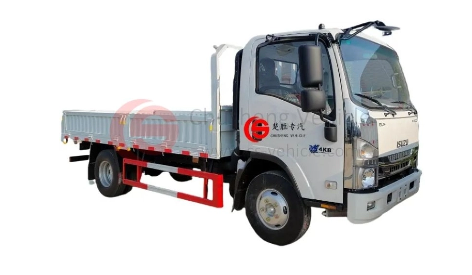
Transporting heavy materials carries inherent risks. Improperly secured loads can result in accidents or material damage. Lorry trucks are engineered to address these safety concerns. Reinforced chassis and frames prevent deformation under heavy loads, while advanced suspension systems maintain stability even on rough terrain.
Modern lorries are equipped with advanced load securing systems, including straps, side rails, and lockable containers. These systems prevent load shifting during transit. Additionally, air brakes and anti-lock braking systems ensure safe stopping, even when carrying maximum payloads. Elevated driver cabins provide better visibility, allowing operators to navigate complex construction zones safely.
Lorry trucks contribute to cost savings in multiple ways. By transporting larger volumes in fewer trips, they reduce fuel consumption and labor costs. Fewer transfers between vehicles also minimize handling risks and equipment wear.
Unlike trains or ships, which operate on fixed schedules, lorry trucks can be deployed on-demand, providing unparalleled flexibility. Modern diesel engines and hybrid systems enhance fuel efficiency for heavy-duty trucks, further reducing operational expenses. These combined factors make lorry trucks a cost-effective solution for construction logistics.
Tipper trucks are specifically designed to transport loose bulk materials such as sand, gravel, crushed stone, and concrete. Their hydraulic tipping mechanisms allow rapid unloading directly at construction sites, minimizing manual handling. Some modern tipper trucks feature adjustable tipping angles, enabling precise material placement in confined spaces. For projects requiring continuous supply of loose aggregates, such as road construction or landscaping, tipper trucks are indispensable.
Flatbed lorries are characterized by their open platforms without sidewalls, providing the flexibility to carry oversized or unusually shaped materials such as steel beams, timber panels, and precast concrete elements. They facilitate easy loading and unloading using cranes, forklifts, or gantry systems. Flatbed lorries often include modular attachments, such as extendable platforms, which allow transport of materials longer than the truck chassis, an advantage in bridge or high-rise construction projects.
Construction materials such as cement, gypsum boards, and tiles are sensitive to moisture, dust, or rough handling. Container lorries provide fully enclosed spaces that protect these materials from environmental exposure and reduce the risk of breakage. Some container lorries are equipped with climate control systems to prevent moisture absorption or material degradation during long-distance transport. These vehicles ensure that delicate materials reach the construction site in optimal condition, maintaining quality standards and minimizing waste.
Certain lorry trucks come with integrated cranes, allowing operators to lift heavy materials directly onto the truck or deposit them at precise locations on the construction site. This reduces reliance on separate lifting machinery and expedites workflow. For example, steel beams or concrete blocks can be moved from the loading area to the exact placement point without additional equipment. Crane-equipped lorries are particularly useful in urban construction zones with limited space, where conventional loading and unloading may be challenging.
Advances in truck engineering have led to multi-function lorries that combine tipping, flatbed, and crane capabilities in one vehicle. These hybrid trucks allow contractors to transport diverse material types using a single vehicle, reducing fleet requirements and operational complexity. For instance, a single multi-function lorry can deliver gravel, steel rods, and pre-cast panels within the same project site without the need for multiple trucks.
Modern lorry trucks are increasingly designed to meet stringent environmental regulations. Diesel engines are optimized to reduce particulate matter and nitrogen oxide emissions, while hybrid and electric models are emerging in urban construction logistics.
Lorry trucks are subject to strict road safety regulations, including load limits, vehicle inspections, and driver qualifications. Adhering to these regulations ensures legal compliance and reduces risks of fines or operational disruptions.
The lorry truck’s combination of high payload capacity, adaptability, safety features, operational efficiency, and cost-effectiveness makes it the preferred choice for transporting heavy building materials. Whether it is steel beams, cement, timber, or concrete panels, lorry trucks can meet the diverse and demanding requirements of modern construction projects. Their versatility and ability to deliver materials directly to the site significantly reduce delays and handling risks, contributing to successful project outcomes.
For companies seeking reliable and advanced lorry trucks tailored for construction logistics, CHUSHENG VEHICLE GROUP CO.,LTD. offers a wide range of solutions that meet industry standards and operational demands. Their expertise ensures that construction companies have the vehicles necessary to maintain efficiency, safety, and cost-effectiveness in every project.
Q: What types of building materials are best suited for lorry truck transport?
A: Lorry trucks are ideal for heavy and bulky materials such as steel beams, concrete panels, cement bags, and timber, which require stable and secure transportation.
Q: How does a tipper truck differ from a flatbed lorry in construction logistics?
A: Tipper trucks are designed for loose materials like sand and gravel, using hydraulic systems for unloading, whereas flatbeds carry oversized or pre-cast materials and rely on external cranes for loading and unloading.
Q: Can lorry trucks access remote or uneven construction sites?
A: Yes, many lorry trucks are equipped with reinforced suspensions and off-road capabilities, allowing them to navigate uneven terrain and limited-access areas efficiently.
Q: Why are lorry trucks more cost-effective than smaller vehicles for construction projects?
A: Lorry trucks transport larger loads per trip, reducing fuel consumption, labor costs, and handling requirements, while providing flexible scheduling to match project timelines.

